
Boat Polishing vs. Ceramic Coating: What Fort Lauderdale Boat & Yacht Owners Need to Know
Most boat owners in Fort Lauderdale already understand the need for regular washing, yacht detailing, polishing and waxing. What is newer for many owners is professional marine ceramic coating — a longer-lasting protective layer applied over a properly prepared surface.
Polishing, waxing and ceramic coating are often discussed as if they are interchangeable, but they are not.
- Polishing corrects the surface.
- Wax provides temporary protection.
- Ceramic coating creates a more durable protective layer over a properly prepared surface.
In Fort Lauderdale and across South Florida that distinction matters more than it does in most boating markets. Local vessels face intense year-round UV, saltwater and salt spray, high humidity, heavy rain, mineral-laden water spotting, marina contaminants, bird droppings, constant washdowns and twelve months of boating with no winter storage break. Those conditions make long-term surface protection particularly important — and they are exactly why so many owners ask about boat ceramic coating in Fort Lauderdale.
Wax Again or Go Ceramic? Have us evaluate your vessel and determine which protection option makes the most sense. → Request an Assessment
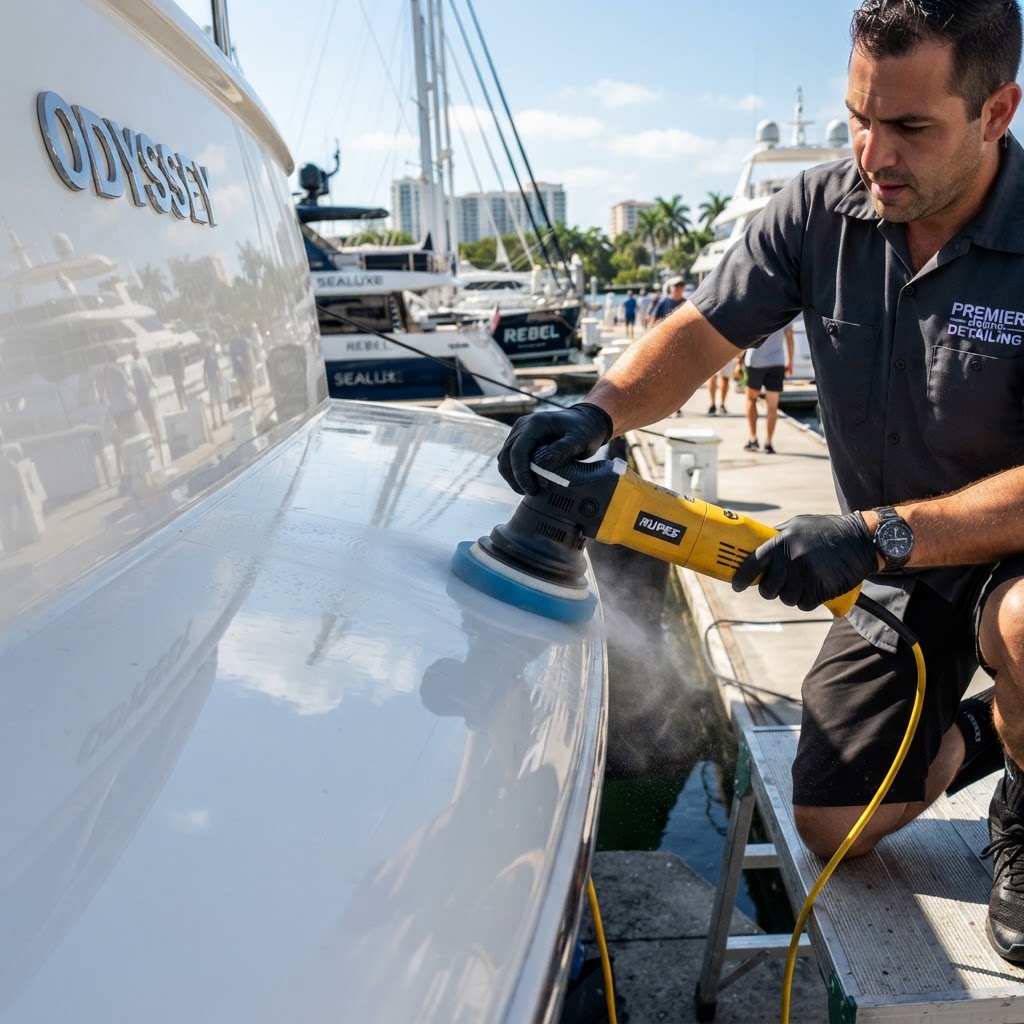
Polishing, Waxing and Ceramic Coating Are Three Different Things
Polishing
Polishing is primarily a surface-correction process. Machine polishing refines or removes a microscopic layer of damaged material to improve oxidation, dull gelcoat, surface haze, loss of gloss, light defects, light staining and weathered surfaces. The goal is to restore clarity and gloss. Polishing is not long-term protection — a polished surface still needs something on top to shield it from UV and contaminants.
Waxing and Traditional Sealants
Traditional wax or sealant is applied after preparation. Benefits may include gloss, water repellency, UV protection depending on product, easier routine cleaning and lower upfront cost. The trade-off is durability: protection gradually wears away through UV, washing and salt, and must be reapplied periodically.
Ceramic Coating
Professional marine ceramic coatings are designed to chemically bond to a properly prepared surface. Potential benefits may include strong hydrophobic behavior, easier routine cleaning, reduced contaminant adhesion, high gloss, longer-lasting protection than many traditional waxes, better environmental protection and reduced frequency of aggressive polishing when properly maintained. Performance depends on product, preparation, application, vessel usage, UV and saltwater exposure, washing practices, storage and maintenance.
Boat Wax vs. Ceramic Coating — Quick Comparison
| Category | Traditional Wax / Sealant | Marine Ceramic Coating |
|---|---|---|
| Initial Cost | Lower | Higher |
| Surface Preparation | Moderate | Extensive |
| Gloss | Excellent | Excellent / Enhanced |
| Hydrophobic Properties | Good | Strong |
| Salt & Contaminant Release | Good | Typically Easier |
| Maintenance | More Frequent | Typically Reduced |
| Reapplication | More Frequent | Less Frequent |
| UV Protection | Product Dependent | Product Dependent / Longer Lasting |
| Surface Correction | Separate Process | Usually Completed Before Coating |
| Long-Term Value | Good | Potentially Excellent |
Results vary depending on the coating system, product, preparation, vessel use, UV exposure, saltwater exposure and maintenance.
Want Longer-Lasting Protection? → Get a Ceramic Coating Quote
Why Surface Preparation Matters More Than the Ceramic Bottle
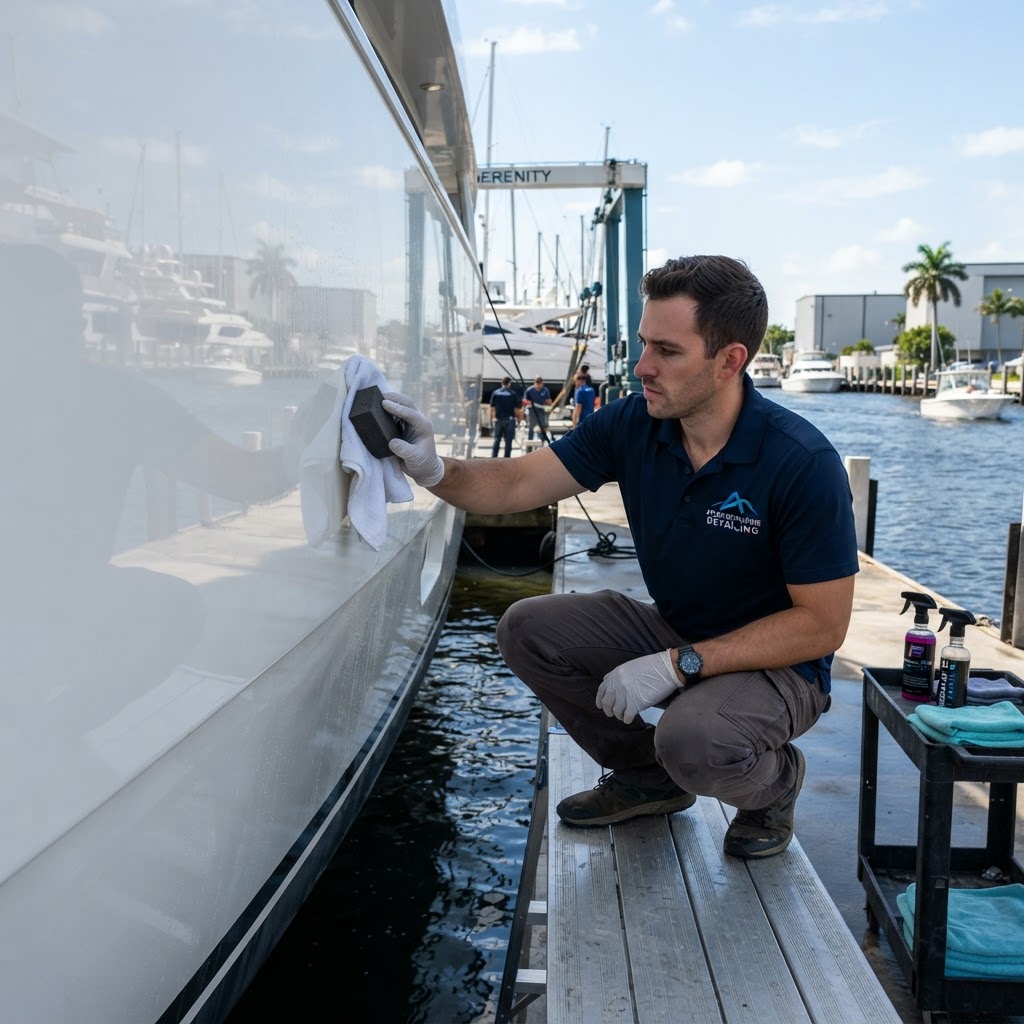
The ceramic coating itself is only one part of the process. Before coating, a vessel may require a complete wash, decontamination, water-spot removal, oxidation assessment, compounding, machine polishing, surface refinement, removal of polishing oils, final surface preparation, proper application conditions and cure time.
The key point: ceramic coating does not magically repair oxidized, faded or damaged gelcoat. Oxidation, haze, staining or defects should generally be corrected before coating. Ceramic coating protects the quality of the prepared surface underneath it — which is why boat oxidation removal in Fort Lauderdale is so often part of a coating project, not an alternative to one.
Why Ceramic Coating Makes Sense in Fort Lauderdale
Intense Florida UV Exposure. Boats in Fort Lauderdale get strong sunlight year-round. UV is the biggest driver of gelcoat oxidation and gloss loss, and South Florida boats get a full year of it with no off-season relief.
Saltwater and Salt Spray. Salt repeatedly dries on exterior surfaces and must be removed; left in place it accelerates staining and etching. A coating that helps contaminants release more easily is genuinely useful here.
Humidity. South Florida humidity keeps surfaces damp and extends drying time, feeding water spotting and mold. Proper protection and proper drying both matter.
Frequent Washing. Yachts in Fort Lauderdale often receive frequent washdowns. That frequent washing is necessary — but it gradually wears down traditional wax. A coating's durability advantage is most visible on vessels washed several times a week.
Water Spots. Rain, rinse water and mineral deposits leave spots on glass, gelcoat and stainless. Better hydrophobic behavior helps water sheet off, but drying is still required.
Year-Round Boating. Many local boats stay in the water and exposed all year instead of being stored for winter. That means more UV hours, more salt exposure and more reason to invest in durable protection.
For all of these reasons, boat ceramic coating in Fort Lauderdale and yacht ceramic coating in Fort Lauderdale are not vanity purchases — they are a direct response to local conditions.
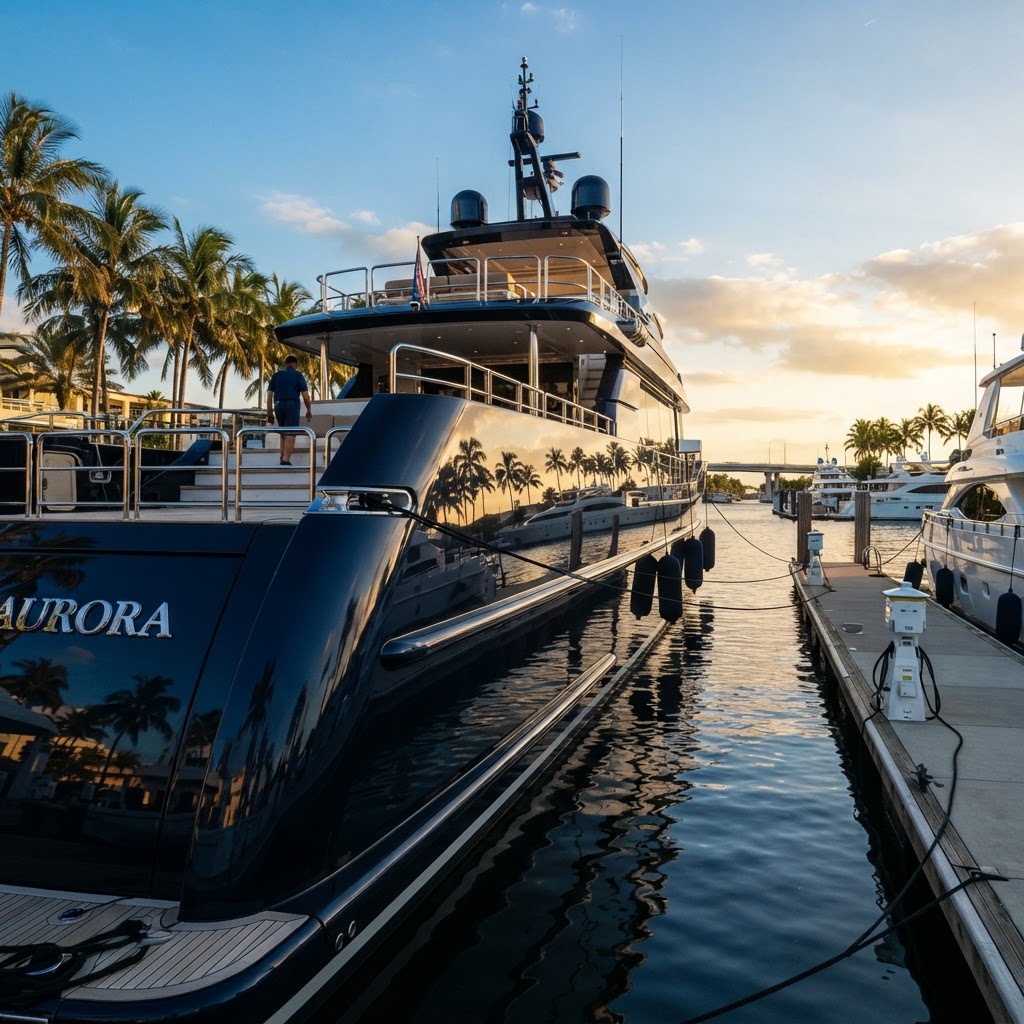
Ceramic Coating Does Not Replace Boat Detailing
Ceramic coating does not mean never washing the boat, never maintaining the surface, never drying it, never dealing with water spots, or enjoying scratch-proof or permanent protection. It is none of those things.
Instead, ceramic coating changes the maintenance strategy. A ceramic-coated yacht still needs regular washdowns, proper marine-safe soap, proper drying, water-spot management, periodic inspection, appropriate coating maintenance and maintenance toppers where required by the coating system. The difference is that contaminants may release more easily and the surface may require less aggressive correction over time when properly maintained.
The Real Cost of Ceramic Coating vs. Traditional Detailing
Owners should not compare one wax job against one ceramic coating application — that comparison is misleading. A more realistic comparison is repeated polishing + waxing + labor + maintenance over time versus professional correction + ceramic coating + maintenance.
Factors that influence long-term cost include the frequency of polishing and waxing, washdown labor, surface condition, oxidation correction, vessel size, vessel usage, owner or crew time and maintenance expectations. Ceramic coating may carry a higher upfront cost, but it can make sense for owners who value easier maintenance, high-gloss presentation, longer-lasting protection, reduced contaminant adhesion and less frequent aggressive correction where possible.
Traditional Maintenance vs. Ceramic Maintenance
Illustrative Maintenance Comparison
Traditional Protection: Wash → Wash → Wash → Wax / Sealant Maintenance → Wash → Polish / Wax as Needed → Repeat
Ceramic Protection: Professional Correction → Ceramic Coating → Proper Routine Washdowns → Coating Maintenance → Periodic Inspection → Recoat When Needed
These are illustrative examples; actual schedules vary by vessel, surface and coating system. Ceramic is not simply a more expensive wax. It is a different surface-protection strategy.
Does Ceramic Coating Make a Boat Easier to Wash?
Yes — in most cases, meaningfully easier. Ceramic-coated surfaces are strongly hydrophobic, meaning water beads and sheets off differently than on bare or waxed gelcoat. That can help salt and dirt release more easily, water bead and sheet differently, drying become easier, the need for aggressive cleaning drop, and surfaces stay cleaner between washdowns. It does not mean dirt cannot stick — it means contamination generally releases with less effort and gentler products.
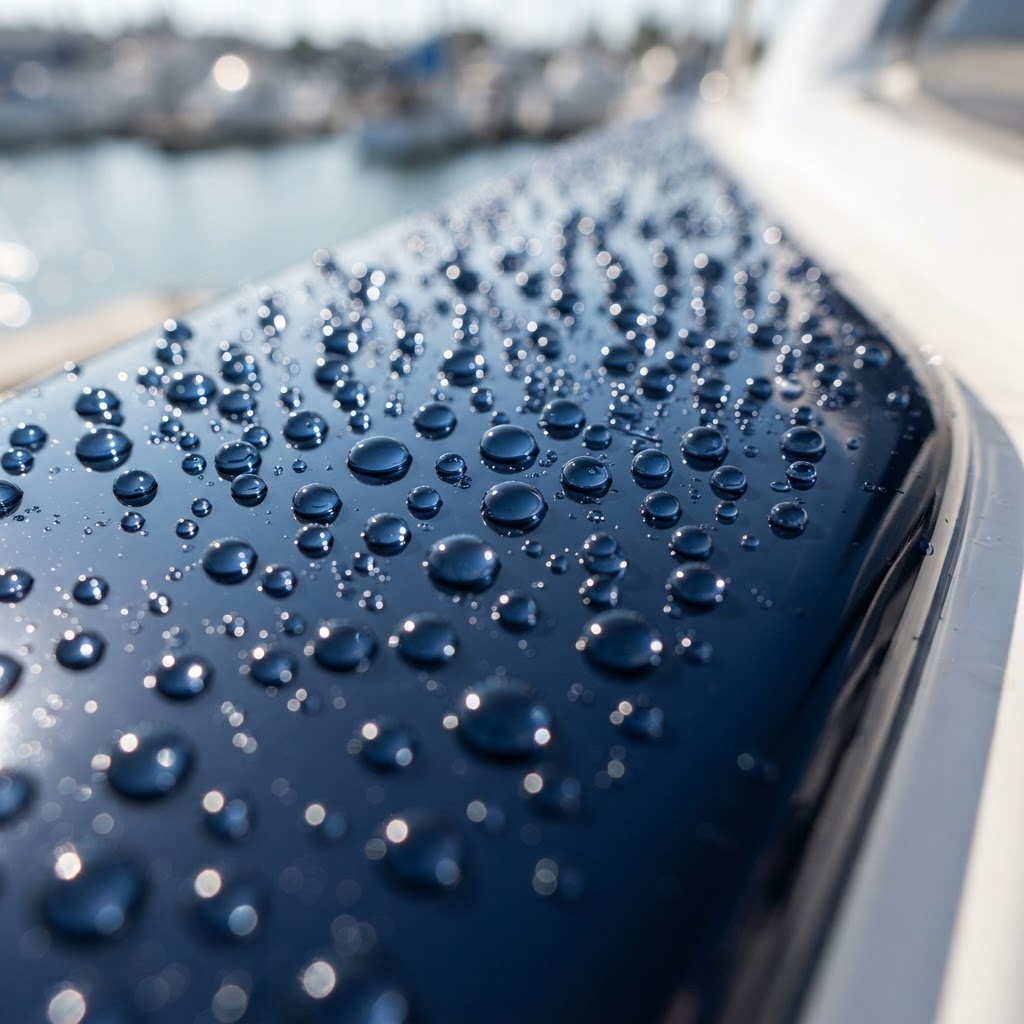
Does Ceramic Coating Prevent Water Spots?
No. Ceramic coating is not water-spot proof. Water containing dissolved minerals can still leave deposits when allowed to dry on any surface — coated or not. A coating helps water sheet off, but standing water left in the sun will still spot. That is why proper drying remains important, and why our recurring yacht washdown and drying services pair naturally with a coated finish.
Can You Ceramic Coat Boat Gelcoat?
Yes — where an appropriate professional marine coating system is compatible with the surface. Ceramic coating for boat gelcoat is one of the most common applications we see. Older or weathered gelcoat may first require oxidation removal, compounding, machine polishing, surface refinement and final preparation. Marine ceramic coating in Fort Lauderdale should always begin with an assessment of the actual surface, not an assumption that any hull is ready to coat.
Can You Ceramic Coat a Painted Yacht?
Compatible marine ceramic coating systems may be suitable for certain properly prepared yacht paint systems. Product compatibility and manufacturer recommendations matter enormously — not every coating can be applied to every marine paint system, and painted surfaces need a different preparation approach than gelcoat.
What Other Yacht Surfaces Can Be Ceramic Coated?
Depending on the coating system, specialty coatings may be available for gelcoat, painted surfaces, glass, stainless steel, metal and certain exterior components. The correct product must be selected for the specific substrate — a general-purpose ceramic should not be assumed safe for every surface.
What Does a Professional Yacht Ceramic Coating Service Include?
- Vessel Assessment — Inspect surface condition and determine required correction.
- Complete Wash — Remove salt, dirt and loose contamination.
- Surface Decontamination — Remove bonded contaminants where necessary.
- Oxidation Correction — Compound oxidized surfaces when required.
- Machine Polishing — Refine the surface and restore gloss.
- Final Surface Preparation — Remove polishing oils and residues.
- Ceramic Coating Application — Apply the appropriate professional marine coating.
- Cure Time — Allow the coating to cure per product requirements.
- Final Inspection — Inspect all treated surfaces.
- Maintenance Instructions — Provide proper maintenance recommendations to the owner, captain or crew.
This is why professional ceramic coating involves much more than wiping a product onto a boat — most of the work happens before the coating is ever opened.
When Ceramic Coating Is Worth Considering
Ceramic coating may make sense if the yacht stays in South Florida year-round; the vessel receives heavy UV exposure; the owner wants easier routine maintenance; the boat is professionally maintained; the owner wants a high-gloss finish; the yacht receives frequent washdowns; the yacht is used for charter; the yacht is being listed for sale; the yacht attends boat shows; the owner wants to protect recently corrected gelcoat; the vessel was recently painted; or the owner wants to reduce frequent waxing and aggressive polishing where possible.
When Traditional Waxing May Still Make Sense
Ceramic coating is not necessarily right for every boat. Traditional waxing may make sense for lower-use boats, boats stored indoors, owners prioritizing lower upfront cost, short-term ownership situations, surfaces that first require major restoration, owners who enjoy regular waxing themselves, and vessels where long-term coating protection is not a priority. Yacht Detailing Fort Lauderdale can recommend the appropriate solution based on the vessel instead of automatically pushing ceramic coating.
Ceramic Coating for Yachts Being Listed for Sale
For owners, brokers, brokerages and management companies, exterior presentation is especially important before listing photography, broker walkthroughs, buyer showings, surveys, inspections and yacht shows. Polishing and protecting the finish can help maintain the yacht's presentation throughout the sales process. We do not claim ceramic coating guarantees a higher sale price or faster sale — only that a corrected, well-protected finish photographs and presents better than a dull, unprotected one. If your vessel is heading to the Fort Lauderdale International Boat Show, this pairs directly with our boat show yacht preparation service.
Ceramic Coating for Yacht Management Companies
For yacht managers, possible operational benefits include easier recurring maintenance, reduced need for aggressive cleaning, high presentation standards, protection of recently corrected finishes, a simplified exterior-care strategy and consistent appearance between owner visits. Yacht Detailing Fort Lauderdale works with yacht managers, captains, crew, owners, brokers and management companies — coordinating one exterior-care standard across the vessels you oversee.
Boat Polishing vs. Ceramic Coating — The Bottom Line
- Polishing corrects.
- Wax provides temporary protection.
- Ceramic coating protects a properly prepared surface as part of a longer-term maintenance strategy.
Polishing and ceramic coating are not necessarily competing services. In many cases, professional polishing is part of the preparation process before ceramic coating.
The real decision is often not whether to polish or ceramic coat the yacht. The decision is whether to polish and apply traditional protection, or polish and then protect that corrected finish with a professional marine ceramic coating.
Is Ceramic Coating Worth It for Your Boat?
Ceramic coating can be a strong investment for an owner who values appearance, easier routine maintenance, professional presentation, longer-lasting protection and protecting a corrected finish. But the honest answer depends on vessel condition, size, storage, usage, existing oxidation, gelcoat or paint system, maintenance expectations and budget. The only way to know for sure is a professional vessel assessment.
Boat & Yacht Ceramic Coating in Fort Lauderdale
Yacht Detailing Fort Lauderdale can assess the vessel and determine what level of preparation is required. Potential services include exterior wash, surface decontamination, oxidation correction, compounding, machine polishing, gelcoat restoration, surface preparation, marine ceramic coating, glass coating where appropriate, stainless protection where appropriate, recurring washdowns and ceramic coating maintenance. We work with boats and yachts throughout the greater Fort Lauderdale marine community; all service is coordinated with the client, marina or facility as required.
Protect the Finish You've Invested In → Schedule a Vessel Assessment
Frequently Asked Questions
Is ceramic coating worth it on a boat?
For many South Florida vessels, yes — when the owner values easier maintenance, longer-lasting protection and preserving a corrected finish. For low-use or indoor-stored boats, traditional wax may be enough.
Is ceramic coating better than wax for boats?
"Better" depends on the goal. Ceramic generally lasts longer and releases contaminants more easily; wax costs less upfront and is simpler to reapply. For a year-round, heavily exposed Fort Lauderdale yacht, ceramic is often the stronger long-term strategy.
How long does ceramic coating last on a boat?
Durability varies by product, preparation, UV exposure, saltwater exposure, washing and maintenance. We do not give an unsupported universal lifespan. A properly maintained professional coating typically outlasts traditional wax, but no coating is permanent.
Can ceramic coating prevent boat oxidation?
Ceramic can help protect a prepared surface from UV and contaminants, but it does not make gelcoat immune to UV degradation. That is why oxidized gelcoat is corrected before coating.
Does a boat need to be polished before ceramic coating?
Many vessels require polishing or correction before coating, depending on surface condition. Applying coating over dull or oxidized gelcoat locks the imperfection under the coating. Preparation is the foundation of the result.
Can you ceramic coat oxidized gelcoat?
Oxidation should generally be corrected before coating. Coating over oxidation protects the damage rather than removing it. Compounding and polishing restore the surface first, then coating locks in that corrected finish.
Does ceramic coating prevent water spots?
No. It is not water-spot proof. Mineral-laden water can still leave deposits when allowed to dry. A coating helps water sheet off, but proper drying remains required.
Can ceramic coating be used on yacht paint?
Compatible coatings may be used on certain marine paint systems after proper assessment. Product compatibility and manufacturer guidelines matter; not every coating suits every paint system.
Does a ceramic-coated boat still need to be washed?
Yes. A coated yacht needs regular washdowns with proper marine-safe soap, proper drying, water-spot management and periodic coating inspection. Coating makes maintenance easier and gentler — it does not eliminate it.
How much does boat ceramic coating cost?
Price depends on vessel length, surface area, surface condition, oxidation, correction required, surface type, coating system and access. We encourage a vessel assessment so the estimate reflects the actual work your boat needs.
What is the difference between polishing and ceramic coating?
Polishing corrects. Ceramic protects. Polishing refines the gelcoat or paint to restore gloss; ceramic coating bonds to that prepared surface to protect it. In most professional projects, polishing comes first and ceramic protects the corrected finish.
Request a Ceramic Coating Assessment
Tell us about your vessel. We'll evaluate the existing finish and recommend whether polishing, wax or ceramic coating makes the most sense — with no pressure to choose ceramic.
Owners, Captains, Brokers & Yacht Managers Welcome
Ready for a Customized Washdown Plan?
Let Yacht Detailing Fort Lauderdale create a washdown and maintenance program specifically for your vessel.